
What Are the Top House Windows Suppliers in China?
Choosing the right source for house windows in China takes more than comparing catalog prices. Buyers must weigh frame materials, glazing, hardware, weather performance, production consistency, and communication. A polished showroom sample can look convincing, yet it cannot show how a window seals after years of use. Details matter.
Building-science expert Dr. Joseph Lstiburek is often associated with the succinct reminder, “A window is a hole in the wall.” The phrase highlights a practical point: even a well-made unit can underperform if its installation, flashing, or surrounding wall assembly is poorly designed. For buyers, supplier selection should therefore include questions about installation guidance and technical support, not just product specifications.
This guide examines leading Chinese house windows suppliers through criteria that can be checked: product range, manufacturing capabilities, quality documentation, customization, export experience, and after-sales service. Ask for current test reports and confirm which product models they cover. Review warranty terms in writing. If possible, compare corner welds, gasket fit, drainage paths, and hardware operation on physical samples. A supplier’s response to specific questions can reveal as much as its brochure. Still, no ranking can replace project-specific checks; a supplier suited to a coastal home may not fit a high-rise renovation. Some details are easy to overlook. That is worth admitting. Use this overview as a starting point, then verify claims directly before choosing a partner.
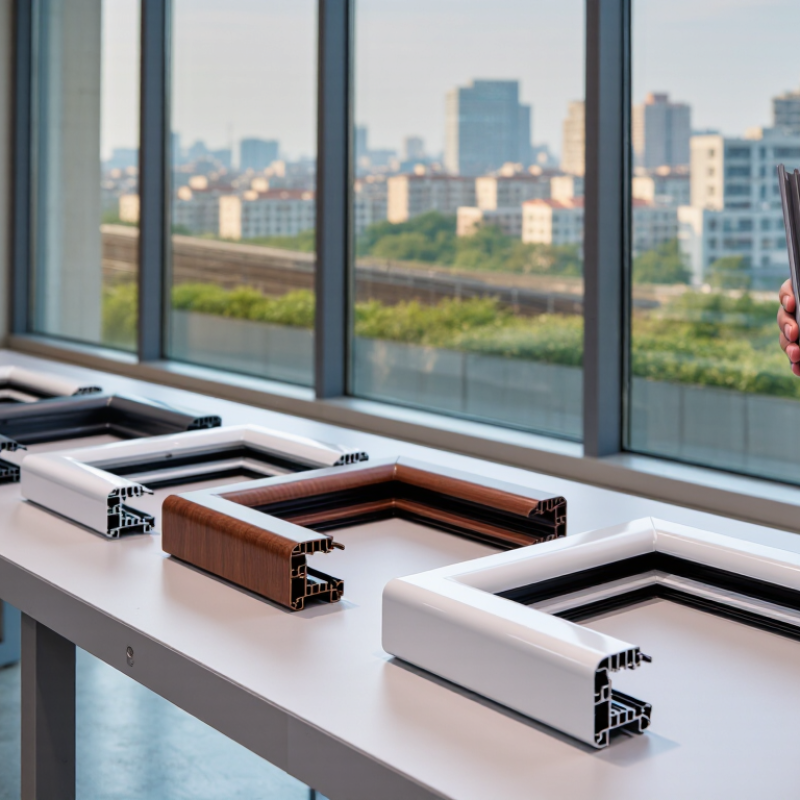
Table of Contents
[Hide]
Overview of China's House Window Supply Industry
China’s house-window supply industry serves new housing, replacement projects, and commercial construction. Suppliers commonly offer aluminum, uPVC, and thermally broken aluminum systems, with options for glazing, screens, hardware, and installation. The market is closely tied to construction activity, but annual figures show how quickly conditions can change. The National Bureau of Statistics reported 998.31 million square metres of completed building area in 2023, up 17.0% year on year. Its 2024 real estate development release recorded 737.43 million square metres, down 27.7%. These figures cover buildings, not window orders, so they indicate context rather than direct demand. Demand is uneven.
For buyers, product performance depends on more than the frame material. Glass configuration, airtight seals, drainage details, hardware durability, and installation quality all affect comfort and service life. China’s GB/T 8478-2020 standard sets technical requirements for building windows, while project specifications may add stricter performance targets. Check test documentation against the exact window configuration, not just a catalogue sample. Ask how suppliers control dimensions, coating consistency, and packing before shipment; small mistakes can complicate installation. Factory scale can help with volume, yet it does not guarantee careful site coordination. The supply chain is broad, and quality can vary. That remains a real limitation when comparing offers.
| Supplier or Product Segment | Common Window Types | Typical Applications | Capabilities to Compare | Buyer Checks |
|---|---|---|---|---|
| Aluminium window manufacturers | Sliding, casement, tilt-and-turn, and fixed windows; thermal-break and non-thermal-break aluminium systems | Residential buildings, apartments, and renovation projects | Profile and frame fabrication, glazing options, hardware selection, surface finishes, and made-to-measure production | Confirm profile specifications, frame and sash dimensions, glass configuration, hardware details, and performance test records for the quoted configuration. |
| uPVC window manufacturers | Casement, sliding, tilt-and-turn, and fixed windows made with unplasticized polyvinyl chloride profiles | Homes and residential projects where low-maintenance frames are required | Profile system, reinforcement method, drainage design, glazing compatibility, and available opening styles | Request profile-section drawings and confirm reinforcement, seals, drainage paths, and compatibility with the specified glazing and hardware. |
| Wood and wood-aluminium window manufacturers | Timber windows and timber frames with an exterior aluminium cladding | Residential projects prioritizing a timber interior finish or a specified architectural appearance | Timber species and construction, coating system, exterior cladding, glazing, and custom sizing | Check the timber specification, moisture-control and finishing details, maintenance requirements, and warranty terms for coatings and components. |
| System-window fabricators | Project-specific windows assembled from coordinated profiles, seals, hardware, and glazing | Projects with defined design, thermal, acoustic, or weather-resistance requirements | System documentation, fabrication controls, component compatibility, and the ability to supply tested configurations | Verify that test reports apply to the same profile series, dimensions, opening type, glass build-up, and hardware as the proposed product. |
| Custom and project-order suppliers | Made-to-measure windows, including combinations of fixed and operable units | Custom homes, replacement work, and projects with non-standard openings | Measurement review, shop drawings, sample approval, packaging, and coordination of mixed window schedules | Approve dimensioned drawings before production and document tolerances, installation interfaces, delivery scope, and responsibility for site measurements. |
| Glass and glazing options | Single, insulating, laminated, or other specified glazing configurations | Selected according to climate, safety needs, building design, and project requirements | Glass composition, pane thickness, spacer and seal details, and compatibility with the frame system | Check glass markings and documentation, safety-glazing requirements for the intended location, and the complete glass build-up stated in the quotation. |
| Performance and standards documentation | Evidence relating to air permeability, water tightness, and resistance to wind load | Useful for comparing products intended for exterior openings | Test reports, declared product configuration, quality-control records, and traceability of supplied components | For relevant Chinese projects, ask whether testing was conducted with reference to GB/T 7106-2019 and whether the report matches the offered product. Confirm applicable project and destination-market requirements separately. |
| Supplier qualification and export readiness | Applies across window materials and product segments | Domestic procurement and international sourcing | Manufacturing capability, quality inspection, export packing, shipping-document support, and after-sales process | Confirm the legal supplier identity, factory or production arrangement, inspection scope, packaging standard, Incoterms, lead-time basis, and remedies for defects or damage. |
Related Posts
-
Top 10 Types of Windows for Your House
-

Navigating Challenges with Sourcing French Windows for Global Buyers
-
What Are the Top 10 Types of House Windows?
-
Top 10 Types of Windows for Your House to Buy
-
How to Choose the Best House Windows?
-

Ultimate Guide to Choosing the Perfect House Windows for Your Home