Choosing windows for your house is not just a matter of matching frames to a paint color. Windows affect daylight, ventilation, privacy, views, and energy use. A broad picture window can brighten a dim living room, while an operable casement window may help direct a breeze into a kitchen. But a window that suits one room may feel awkward in another. Small details matter. Consider the room’s purpose, wall space, climate, and how much effort you can give to cleaning and maintenance. A window that is difficult to reach may be beautiful, but it may not be practical for everyday use.
This guide introduces ten common window types, including double-hung, casement, sliding, awning, bay, bow, picture, hopper, specialty, and skylight windows. Each offers different strengths, and none is automatically right for every home. A bay window can create a sunny sitting nook, but it needs enough exterior space and may cost more to install. A skylight can bring light into a dark hallway, though heat gain and weatherproofing deserve careful attention. Check product ratings and installation requirements, and ask a qualified local professional about options for your home. Those details can vary by climate and building conditions. Some choices may look better on paper than they feel in a real room. Use the comparisons ahead to narrow your options, then weigh appearance against comfort, upkeep, and budget.
Residential windows are classified by how they open and how their frames shape a room. A fixed window does not open, but it brings in daylight and can frame a garden view. Single-hung and double-hung windows slide vertically; in a double-hung unit, both sashes move. These designs suit many rooms, though tracks need occasional cleaning.
Casement windows hinge at the side and swing outward, usually operated with a crank. Awning windows hinge at the top, while hopper windows hinge at the bottom; both tilt open and can help manage light rain. Sliding windows move horizontally along a track, making them useful where an outward-swinging sash would meet a walkway. Tilt-turn windows can tilt inward for ventilation or swing inward for cleaning. Small differences matter. I have found that the handle’s reach can affect daily comfort more than a catalog photo suggests.
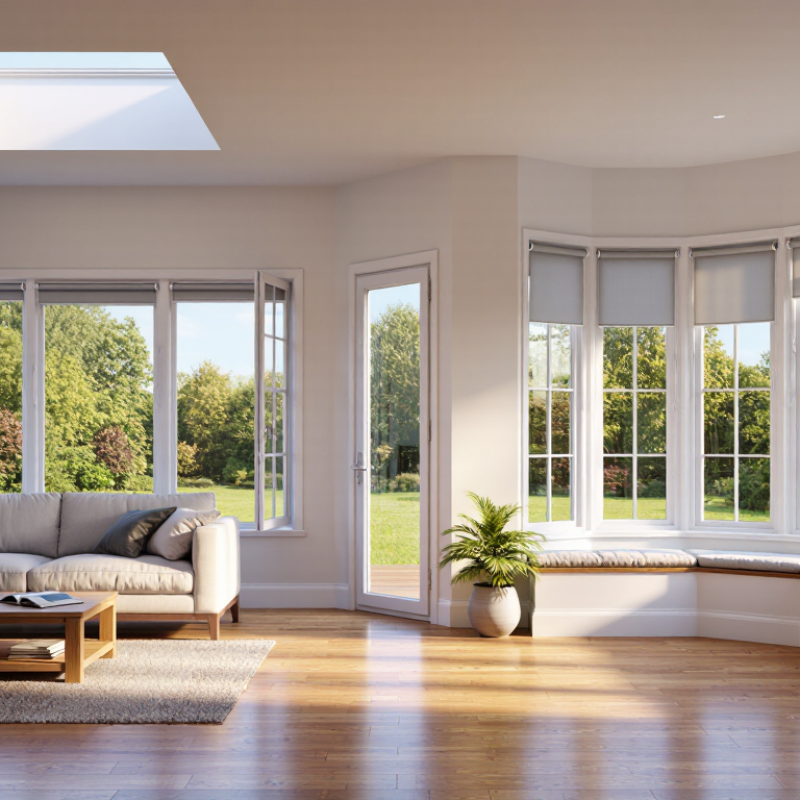
Bay and bow windows project outward from the wall, but their layouts differ: bays commonly use angled sections, while bows form a gentler curve with multiple units. They create interior ledges and broaden views, yet require careful planning for support, insulation, and furniture placement. Operation, frame shape, room orientation, and cleaning access all help determine which window type is practical. A sunny bedroom may need different ventilation than a shaded kitchen.
Ten common window types can change a room’s light, ventilation, and usable space.
Looks can mislead.
Each type has limits: a projecting window may crowd a narrow walkway, while a fixed unit offers no fresh air.
Energy performance deserves equal attention. The U.S. Department of Energy estimates that heat gain and loss through windows account for 25–30% of residential heating and cooling energy use. The National Fenestration Rating Council’s labels show U-factor and solar heat gain coefficient, helping homeowners compare products for their climate. A large sunny window may brighten a room, yet increase summer heat; shade and orientation matter too. I would check those details before choosing by appearance alone.
The right window changes more than a room’s appearance. It affects where daylight lands, how stale air escapes, and what you see from your chair. A casement window swings outward, catching breezes that slide along an exterior wall. Double-hung windows let warm air leave through the upper sash while cooler air enters below. The effect can feel subtle. It depends on wind and room layout.
Other styles make different trade-offs. Sliding windows are easy to operate, but only one side usually opens, limiting airflow. Awning windows can admit air during light rain, though their outward-facing glass may block a narrow walkway. Picture windows stay closed, yet their large panes can bring in generous daylight and frame a garden without sash bars interrupting the view. Bay and bow windows project outward, creating a wider outlook and a small ledge for plants. Check that the added glass does not create unwanted glare.
For smaller rooms, hopper windows can provide ventilation near the floor, while clerestory windows bring daylight in high on a wall without giving up much privacy. A garden window offers space for herbs, but its projections may feel bulky in a tight kitchen. Measure the view from standing and seated positions. Then consider which way the room faces and where air can travel through it. I have seen attractive windows disappoint when a cabinet blocks the opening. Small details matter.
| Window Type | How It Opens | Natural Light | Ventilation | View | Key Consideration |
|---|---|---|---|---|---|
| 1. Single-Hung | The bottom sash slides upward; the top sash stays fixed. | Good, depending on the glass area and frame. | Moderate; air enters through the lower opening. | Clear when open, though the frame divides the glass. | A simple, space-saving option; only one sash opens for cleaning and airflow. |
| 2. Double-Hung | Both the upper and lower sashes slide vertically. | Good, with a traditional divided-glass appearance. | Good; opening both sashes can support airflow at different heights. | Good, but the meeting rail crosses the view. | Often allows both sashes to tilt inward for easier cleaning, depending on the design. |
| 3. Casement | A side-hinged sash swings outward, usually operated by a crank. | Very good; the frame can leave a broad glass area. | Very good; the open sash can catch breezes. | Broad and relatively unobstructed when closed. | Check exterior clearance so the sash can open without hitting a walkway, deck, or shrub. |
| 4. Awning | A top-hinged sash opens outward from the bottom. | Good; available glass area varies by size. | Good for controlled ventilation while the window is partly open. | Good, though the sash may affect the view when open. | The projecting sash can help shield the opening from light rain, but it does not make an open window weatherproof. |
| 5. Horizontal Sliding | One sash slides sideways past the other. | Good, with a wide horizontal glass area. | Moderate; typically about half the window area can open. | Wide, horizontal sightlines; the central frame remains visible. | Does not project outward, making it useful beside patios or walkways; tracks need regular cleaning. |
| 6. Fixed (Picture) | Does not open. | Excellent when sized and positioned for daylight. | None; pair it with an operable window if fresh air is needed. | Excellent; large panes can provide a largely uninterrupted view. | Can be useful where an expansive view is a priority; plan a separate ventilation source and consider heat gain. |
| 7. Bay | A projecting group of windows, often with a fixed center and operable side units. | Very good; angled sections can admit light from more than one direction. | Depends on which sections open; operable side units add airflow. | Wide, multi-angle views that can make a room feel more open. | Projects beyond the wall, so it requires suitable structural support and exterior clearance. |
| 8. Bow | A curved arrangement of several window units; some or all may be operable. | Very good; multiple angled panes can spread daylight across the room. | Varies with the number and type of operable units. | Broad, panoramic views across a gentle curve. | More complex to install than a flat window; confirm support, insulation, and maintenance access. |
| 9. Jalousie (Louvered) | Parallel glass slats tilt open together. | Good when closed; light and view can be interrupted by the slats. | High when open, with airflow across much of the window area. | Segmented; the slats remain visible across the view. | Often suited to mild climates and sheltered areas; sealing and energy performance depend on the unit and installation. |
| 10. Transom | A small window set above a door or another window; it may be fixed or operable. | Good for bringing daylight deeper into a room while preserving wall space below. | Only adds ventilation if the transom is designed to open. | Usually provides a high-level view rather than a full outlook. | Useful for borrowing light between spaces; consider privacy and whether an operable unit is reachable. |
Note: Light, ventilation, and view depend on window size, orientation, glazing, frame design, placement, and nearby obstructions. “Good” and “very good” are general comparisons, not measured performance ratings.
Vinyl frames resist moisture and need little painting, though quality and insulation vary.
Fiberglass is stable through temperature swings and can support efficient glazing, but usually costs more.
Wood offers warmth and strong insulating value; exposed finishes need regular inspection, especially after wet seasons.
Window style matters, but frame material often determines long-term comfort and upkeep.
Glass matters too. Double-pane windows with low-emissivity coatings can reduce heat transfer, while triple-pane units may help in colder climates. These upgrades are not automatically worthwhile everywhere. Local weather, window orientation, and installation quality all affect performance. A poorly sealed frame can waste the benefit of better glass. Small gaps matter.
Tips: Compare whole-window energy ratings, not glass alone. Check that labels match your climate zone. Feel for drafts around existing frames on a windy day, and note condensation between panes. That can signal a failed seal.
Maintenance differs by material and design. Clean tracks and weep holes so water can drain, and inspect caulking each year. Sliding and casement windows may need hardware adjustments; fixed windows have fewer moving parts but still require sound seals. Wood frames deserve prompt attention when paint flakes or soft spots appear. I would not assume a “low-maintenance” frame means no maintenance at all; drainage, seals, and installation still need care.
Window choice should follow how a room is used, not appearance alone. Casement windows open outward and can catch breezes in kitchens or bedrooms. Double-hung and single-hung windows suit traditional rooms, while their vertical sashes help control airflow. Sliding windows work well where furniture or a narrow walkway makes outward-opening windows awkward. Small detail: check where the sash travels.
Bathrooms often need privacy and ventilation. Awning windows can open during light rain, while hopper windows are useful in compact spaces, such as below a basement window. For a quiet study or a living room with a view, picture windows bring in daylight but do not open. Pairing one with an operable window can improve airflow. A bay or bow window adds a deeper sill, though it needs enough wall space and careful installation.
Skylights can brighten dark halls or upper rooms, but their placement, shading, and flashing deserve close attention. Moisture can become a problem if installation is poor. Consider the room’s direction, local weather, cleaning access, and how easily each window can be reached. For children’s rooms, ask a qualified installer about suitable opening limits and safety features. I’d also compare the actual clear opening, not just the frame size; that distinction is easy to overlook. A window can look perfect on a plan and still feel inconvenient in daily use.